
Use your solar power efficiently all year round
The biggest challenge with a solar power system is often that electricity is produced when consumption is low. Without a battery, a significant portion of the production ends up being sold to the electricity grid, making its economic benefit small.
The Deye hybrid inverter and Dawnice lithium battery store excess solar electricity for your own use and automatically optimize battery charging and discharging. The end result is a reduced need for purchased electricity, increased self-sufficiency, and the full benefit of solar electricity.
Practical example
The example site in Southwest Finland has 15 kWp solar panels and a 32 kWh Dawnice battery. In March, total consumption was approximately 1,100 kWh, of which the share of purchased electricity was only 240 kWh (22%). In April, the share of purchased electricity decreased further to approximately 12 percent.
On a sunny day, the panels produced about 47 kWh of electricity and consumption was just under 40 kWh. Thanks to the previous day’s solar production, the battery was almost fully charged, so only about 3 kWh of purchased electricity was needed for the entire day.
In June, the benefits of the battery system were even more evident in the same location in Southwest Finland. The total monthly consumption was 1088.4 kWh, of which the share of electricity purchased from the grid was only 32.2 kWh, or about 3 percent. In practice, 97 percent of the home’s electricity consumption was covered by its own solar power and energy discharged from the battery storage.
- Solar panels produced a total of 2,300.3 kWh of electricity in June.
- 561.9 kWh was used directly for property consumption.
- 536.3 kWh was charged to the battery for later use.
- 494.3 kWh was discharged from the battery for home consumption.
- 1202.1 kWh of surplus production was fed into the grid.
The implementation clearly illustrates why a battery is an important addition to a solar power system. Without a battery, a larger part of the daytime production would be sold to the grid, but with a battery, energy can be transferred to the evening, night, and times when consumption is greater than instantaneous production.
Another example: a battery system reduces the need for purchased electricity even with higher consumption
In another example, the total consumption in June was 1521.8 kWh. The share of electricity purchased from the grid was 342.7 kWh, or approximately 22.5 percent. A total of 1179.1 kWh of own solar power and energy discharged from battery storage was utilized, which corresponds to a self-sufficiency rate of 77.5 percent.
- The solar panels produced a total of 2099.1 kWh of electricity during the month.
- 517.8 kWh was used directly for property consumption.
- 684.3 kWh was charged to the battery for later use.
- 661.3 kWh was discharged from the battery for home use.
- 897.0 kWh of surplus electricity was fed into the grid.
The example illustrates that a home battery also brings benefits in locations where electricity consumption is clearly higher. Although more purchased electricity was needed than in the first example location, the battery system significantly reduced the amount of electricity purchased from the grid and improved the overall benefit of the solar power system.
Intelligent energy management
The system is controlled by Deyen Copilot, which automatically optimizes battery charging and discharging. The default strategy is self-consumption optimization, which means that the system uses as much of the solar power as possible for the property’s own use and minimizes electricity purchased from the grid.
Also useful in winter
A battery is not only useful in the summer. With an exchange-based electricity contract, the system can be programmed to automatically charge the battery during the cheapest hours of the day and use the stored energy for home consumption when the price of electricity is at its highest. This way, electricity is purchased cheaply and used when it is at its most expensive, which brings significant savings completely automatically.
Savings also on energy bills
More and more grid companies are switching to power-based pricing, where billing is also influenced by the property’s highest instantaneous power demand. The battery system smooths out consumption peaks by discharging energy, for example, during charging an electric car, sauna, hot water heater or cooking. This reduces the peak power taken from the grid, which can lower power charges and reduce the electricity bill even further.
Backup power for power outages
One of the most significant advantages of the Deye hybrid inverter is the ability to use the system as backup power during a power outage. When a disturbance occurs in the electrical grid, the inverter safely disconnects the property from the electrical grid and supplies electricity from the battery and solar panels to selected loads.
This allows, for example, lighting, refrigerators, freezers, telecommunications connections, heating system controls, and other important electrical devices to continue operating even during a power outage.
The backup power solution can be implemented with either a manual or automatic network transfer switch. In a manual solution, the user switches the backup power on in the event of a power outage. An automatic network transfer switch, on the other hand, detects the power outage itself and transfers the property to backup power without any user intervention. When the mains power is restored, the system automatically switches back to normal operation.
If the solar panels are still generating electricity during a power outage, they can continue to charge the battery. This significantly extends the operating time of the backup power system compared to a situation where only the battery is used.
Why Deye + Dawnice?
The Deye hybrid inverter and Dawnice LiFePO₄ battery form a reliable and easily expandable whole. The system is suitable for maximizing your own use of solar power, utilizing fluctuations in the price of electricity on the exchange, reducing power bills, and as a backup power solution for a property. With the battery, you can get the most out of your solar power system all year round.
Michael Kukkonen

Energy solutions are integrated into the architecture of wooden construction in Mynämäki
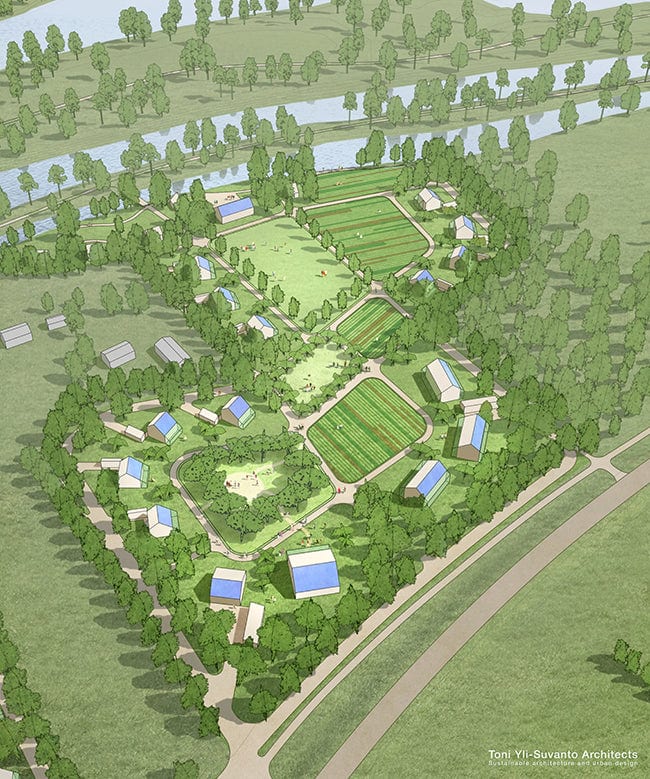
The residential area project being planned in Mynämäki is researching and developing ecological and healthy construction. The aim is to improve the energy efficiency of…
Profit even in November
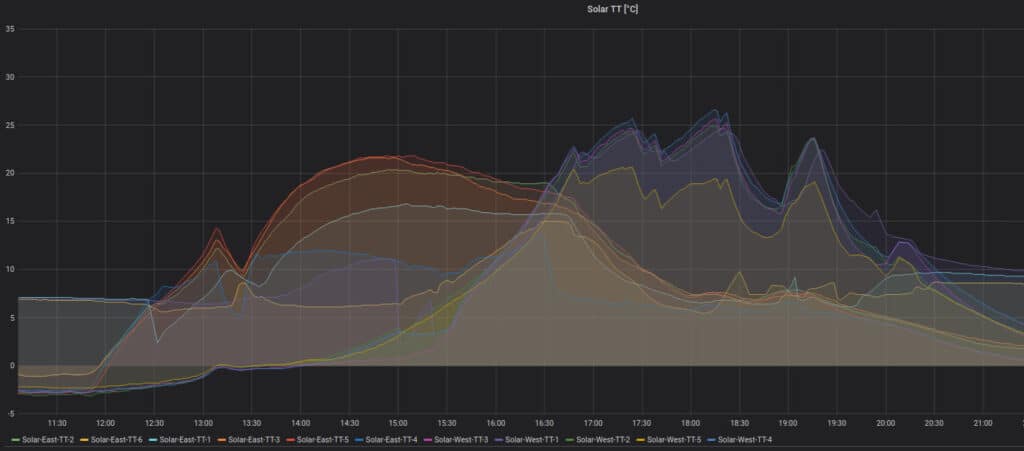
If someone had previously put the words Kaustinen, November and solar heat in the same sentence, I would probably have laughed them out of the…
Sustainable regions and smart villages together
We are pleased to announce that Energio Finland Oy has signed a letter of intent with eight Finnish companies to establish a joint venture so…
Energio Finland Oy and Arctic Smart Village enter into a framework agreement
Arctic Smart Village Oy, which develops sustainable housing, and Energio Finland Oy, which develops and utilizes innovative energy systems, have signed a framework agreement for…
Guide to sizing a solar power system
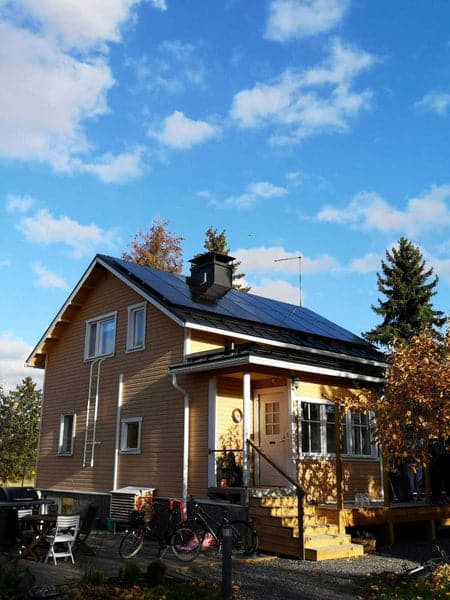
The skyrocketing price of energy has led consumers to want significantly larger solar power systems than before. Today, you could say that there are two…