The price of energy has led many companies and housing associations to consider purchasing a solar power system. However, there is often one practical obstacle to the purchase. Even if the investment would result in significant savings in energy costs and a significantly smaller carbon footprint, many companies do not want to invest tens, even hundreds of thousands, in a solar power plant as a one-time investment. What if the investment could be cash flow positive from day one? With properly structured leasing financing, this is possible. In addition, leasing offers companies several accounting advantages.
Previously, leasing financing was not available for green energy, but this has changed recently thanks to the EU.

Leasing financing works excellently for financing energy systems
Leasing financing is often thought of as a form of financing for vehicles, machinery and equipment, but it is also excellent for financing energy systems. In practice, financing a solar power system with leasing means that:
- The customer does not make an initial investment in the power plant but pays a monthly installment for the system
- Typically, the rental period is 36-72 months.
- In practice, the power plant has been redeemed at the end of the lease period.
In other words, you get the energy system without an initial investment and you pay for the system yourself every month. At the same time, the system saves you money on your energy bills. We will look at a few examples of this in a moment, but first a little about the differences between leasing and installment financing.
Leasing has many advantages compared to installment financing
On the surface, leasing and installment financing are very similar. Each month, you pay a monthly installment and the installment includes a small amount of interest (or, in the case of leasing, rental costs). The interest rates are also similar. However, if you look a little deeper, you will notice that leasing offers many advantages to companies. These include:
- Leasing is not shown as a liability on the balance sheet.
- Leasing VAT is deductible on a monthly basis
- Rent is a tax-deductible expense.
- You can improve your company’s solvency and return on equity
Let the example speak for itself
The example business site has 686 545W panels installed on east-west racks. The simulated annual production of this 380 kWp solar power system is 298 MWh. Taking into account the energy subsidy, the power plant costs approximately €240k. Let’s look at the cumulative cash flow of the investment if it were acquired with a 72-month leasing agreement.
The analysis has been carried out using two different total energy prices. The total energy price consists of the price paid for electricity, the transmission fee, the electricity tax and, in some situations, the power fee and reactive power fees.
It is also worth noting that the calculations do not take into account the accounting benefits of leasing, such as the impact on profit, taxes, or monthly VAT.
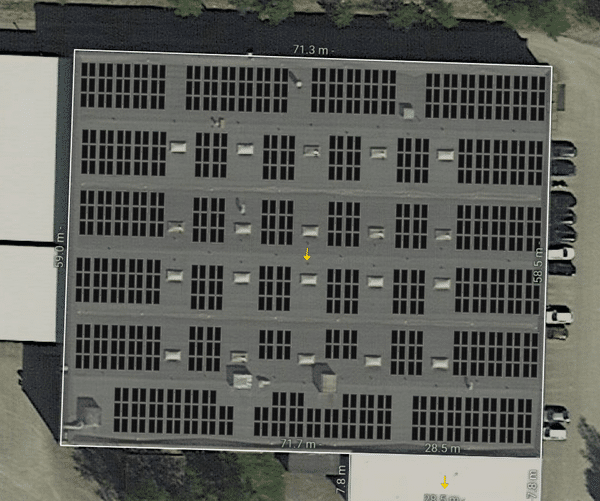
The panels sit neatly on the roof of the site.
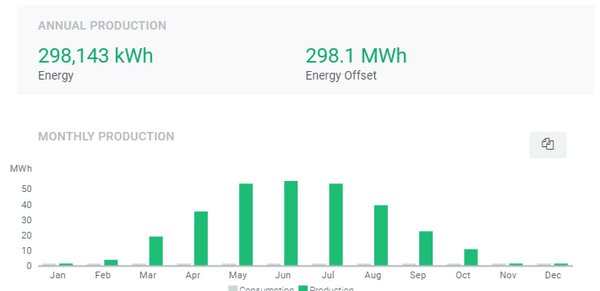
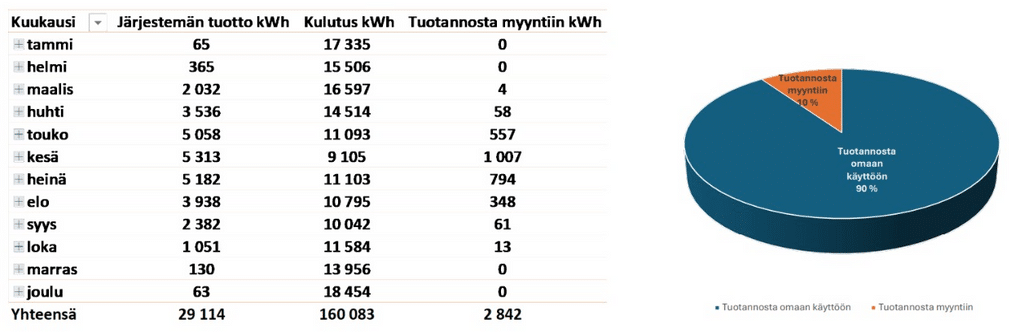
Modeled yield of the target system. The models are based on multi-year averages of solar radiation for the roof in question. Therefore, they are very accurate.
At a price of 17 cents, the system finances itself.
At a total energy price of 17 cents, the system’s euro-denominated return is €50,677 per year. When this is compared to the monthly lease payments, it is noted that the system’s cash flow is €1,913 negative during the lease period. In other words, the €240k system has “paid” €11,478 at the end of the lease period. In practice, the cash flow effect has therefore been neutral.
Cash flow turns into a significant profit in the first year after the leased asset is redeemed. Investments often say that the payback period should be 10 years or less. When looking at the system over a 10-year period, it is noticed that the cumulative cash flow of the system has not only paid for the system, but also generated a profit equal to the price of the system. In other words, the investment is very profitable.
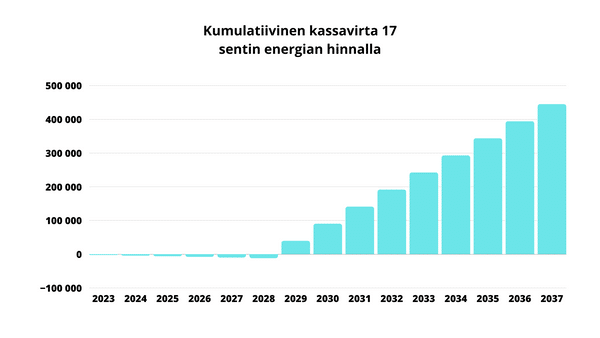
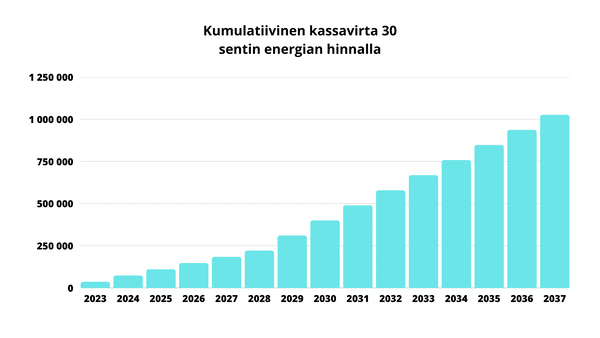
With a total energy price of 30 cents, the system’s return is as much as €89,430 per year. This far exceeds the leasing payments, making the system incredibly profitable. Let the graph below speak for itself…
Easily arrange financing through our partner
Our partner Proventum puts several different financing providers through a competitive bidding process and, if necessary, combines different financing options to create the best overall package for companies’ and housing companies’ energy systems. In practice, this is very easy to do in the following way:
- Leave us a request for a quote
- We will give you a quote for the system and provide the necessary information to Proventum.
- Proventum will contact you to arrange financing.
- Financing decision usually within 1-3 days
- After the financing decision, energy support is applied for for the system (in business locations).
- Installing the system
- Enjoy the profits
As cash flow analyses show, leasing is an excellent way to let an energy system “finance itself.” So what is being put into your company or housing association?

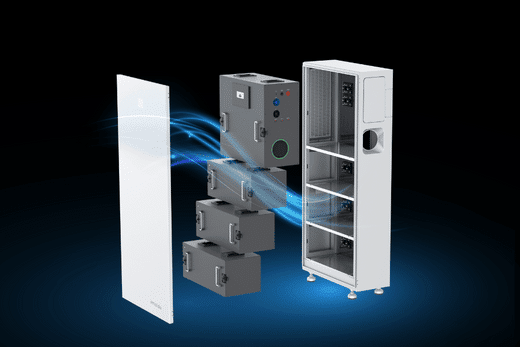
Ready for the reserve market – Solax Reserve Market Batteries now available
We are introducing a great new product for single-family homes, business properties and housing companies that want to enter the reserve market: Solax reserve market…
€8,800 profit in the first year – Energy solution for a company without initial investment
The green transition is often talked about as a mandatory investment and the question is who will pay for it? In other words, the green…
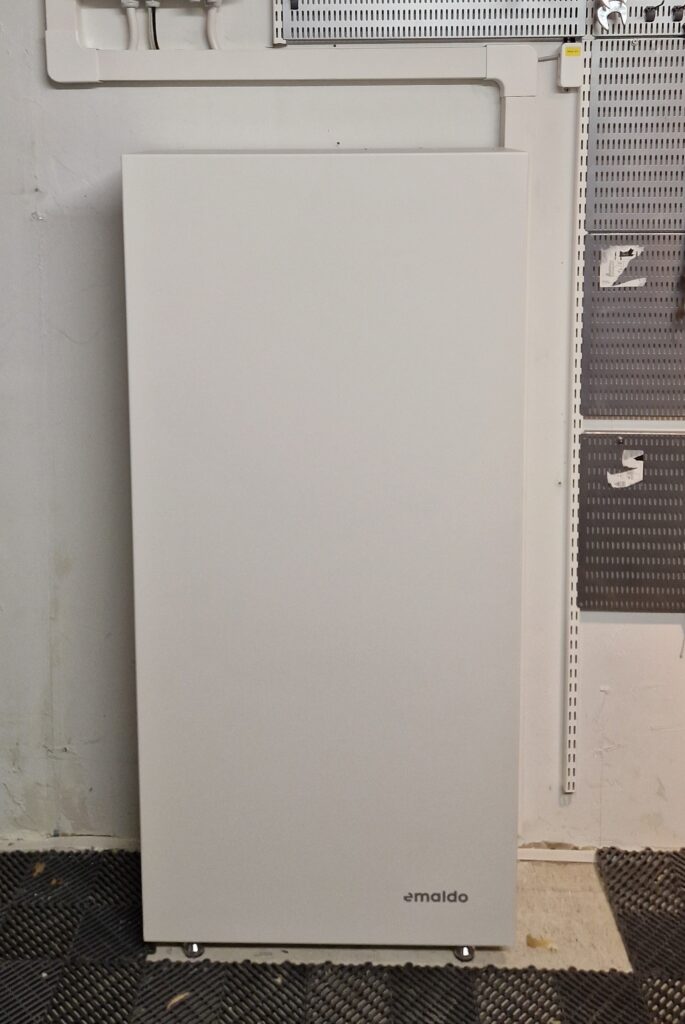
Fingrid tests of Emaldo® batteries have now been conducted for the reserve market
Fingrid’s tests for participation in the frequency reserve market for Emaldo® batteries were successfully completed on January 11-14, 2025. Next, Emaldo® processes all the test…
The economic viability of Emaldo® reserve market batteries
There are a lot of questions about reserve market yields, and no wonder, as the topic is new to consumers. This article contains a calculation…
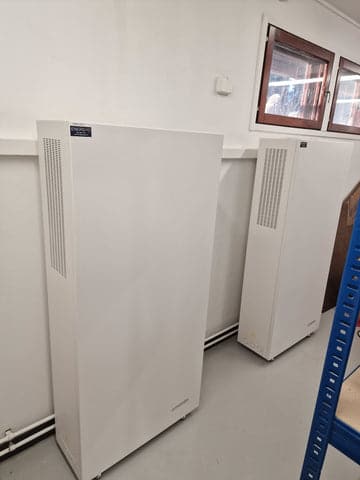
Maximum Emaldo® Grid Rewards compensation paid
Emaldo® batteries enable households, housing companies and corporate sites to earn passive income by participating in the electricity frequency reserve market as part of the…
Electricity Frequency Reserve Market: What is it and how does it work?
The frequency of the electricity grid is a significant part of the stability of the electricity system. In Finland and elsewhere in Europe, this frequency…