
Solar energy has become a popular way to save money and reduce your carbon footprint. But how profitable is it to invest in solar panels from a financial perspective? In this blog post, we will explore how solar panels provide significant financial benefits and why they are an excellent investment for households.
Solar Panels as an Investment: What is the Rate of Return?
Many people wonder about the financial viability of a solar power system. One way to evaluate this is to look at the Return on Investment (ROI).
Let’s take an example: the price of a 20-panel solar power system, including the household deduction, is €6,925.
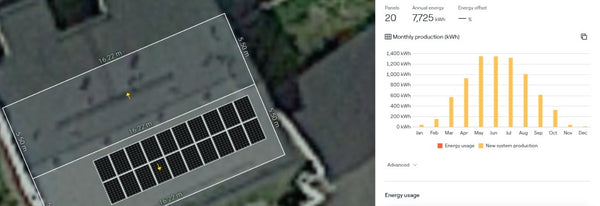
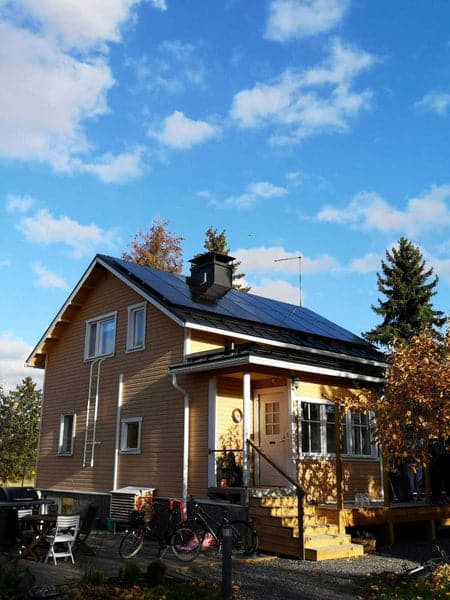
The annual yield of the system is 7725 kWh when placed on the roof in the picture. The value of the electricity it produces is €1238 when the calculation uses the average price of 8.69 cents/kWh from the three electricity companies’ fixed-term contracts for 2.9 and the average electricity transmission price announced by the Energy Agency for 7.34 cents for the year 2023 for a single-family house with electricity consumption of 20,000 kWh/year.
When we calculate ROI we get the following result:
This means that investing in a solar power system will generate almost 18% per year of the initial investment. Solar panels are therefore a very profitable investment. Generally, a return of more than 15% is considered excellent in the investment market.
Solar panels can yield over 20%
If the energy price in the example above had been 17.93 cents/kWh, the system’s yield would have been 20%. This would have been the case in areas where the electricity transmission price is over 9 cents. There are several such network companies in Finland.
Electricity transmission prices have risen significantly recently and, according to network companies, there is enough upward pressure for years to come.
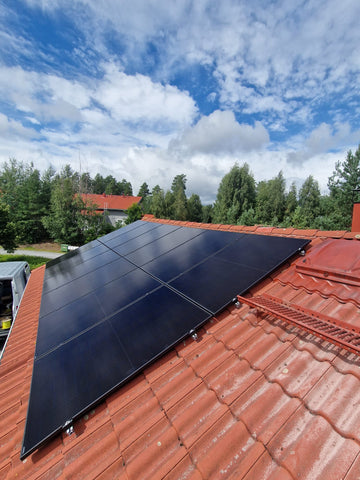
What does this mean in practice?
The return on solar panels means you can get up to 20% back on your investment every year. This is significantly higher than the returns on many traditional investments, such as interest on a bank account or the returns on many mutual funds. What’s more, this return is practically tax-free, as it is directly reflected in reduced electricity bills.
When we also take into account the increase in electricity transmission prices, which has been reported many times recently, the economic benefits of a solar power system can increase even further. Solar panels produce electricity for up to 50 years, which means that in the long run they pay for themselves many times over.
Solar Panel: An Eco-Friendly Choice That Saves You Money
Solar panels are not only a financially profitable investment, but also an environmentally friendly choice. They reduce carbon dioxide emissions and promote the use of renewable energy. With the carbon footprint of electricity used in Finland (statistics from 2022), the average solar panel will pay back the carbon footprint of the panel’s production and shipping in 3.5-4 years.
At the same time, dependence on fossil fuels is reduced.
Sustainable regions and smart villages together
We are pleased to announce that Energio Finland Oy has signed a letter of intent with eight Finnish companies to establish a joint venture so…
Energio Finland Oy and Arctic Smart Village enter into a framework agreement
Arctic Smart Village Oy, which develops sustainable housing, and Energio Finland Oy, which develops and utilizes innovative energy systems, have signed a framework agreement for…
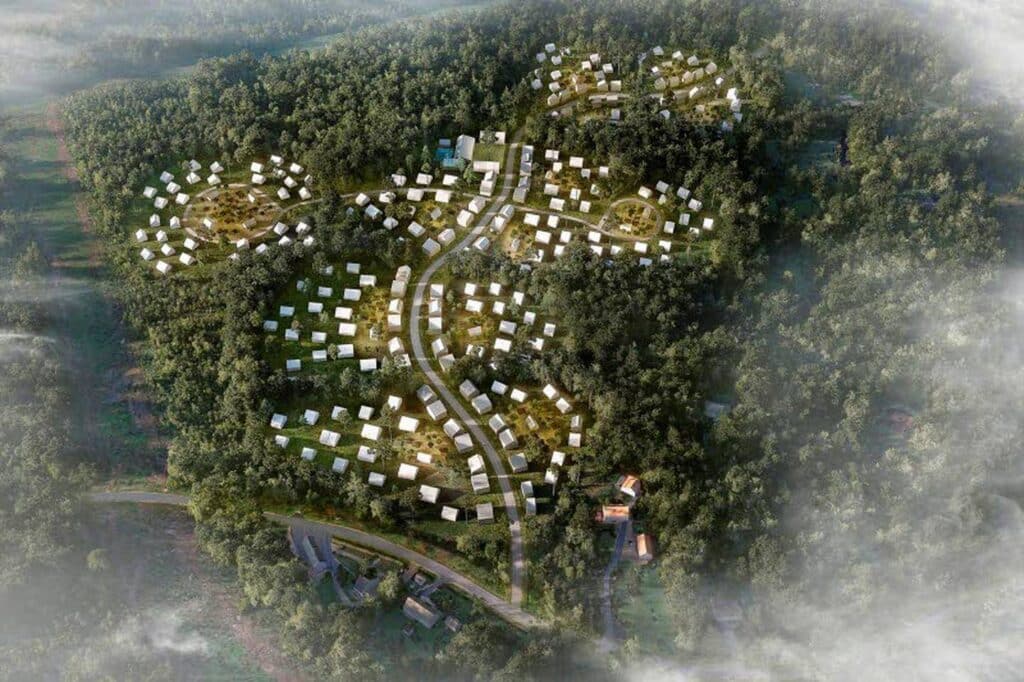
Energio is involved in delivering the energy system to the Masala Eco-Smart Village
Emission-free living and mobility are possible with the production of local energy. Innodriver Oy, the project company for the Masala eco-friendly village, has signed a…
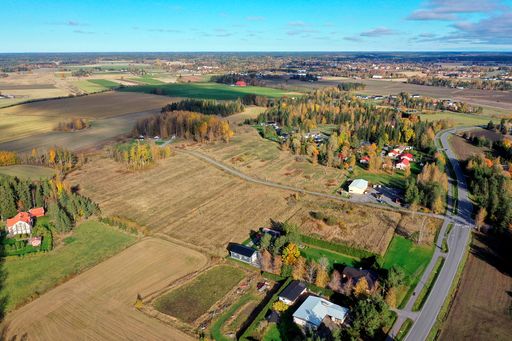
Energy solutions are integrated into the architecture of wooden construction in Mynämäki
The residential area project being planned in Mynämäki is researching and developing ecological and healthy construction. The aim is to improve the energy efficiency of…
Guide to sizing a solar power system
The skyrocketing price of energy has led consumers to want significantly larger solar power systems than before. Today, you could say that there are two…