
The sun is one of the most abundant sources of energy on Earth, and photovoltaic systems offer a sustainable and environmentally friendly way to harness this natural power to generate electricity. But how do photovoltaic systems work and how do they generate electricity? In this blog post, we will delve into this topic and find out how a photovoltaic system converts sunlight into electricity.
1. Basic structure of a photovoltaic system
A photovoltaic system consists of several key components that together enable the production of electricity using sunlight. The most important parts are the solar panels, the mounting system, the cabling and the inverter, as well as a possible battery and backup box.
-
Solar panels: Solar panels are the most visible part of the system. They consist of several solar cells that convert sunlight into electricity. Solar panels are usually installed on the roof or on ground racks, where they receive as much sunlight as possible. If you want to read more about solar panel technology, you can find our plain-language article on the topic here
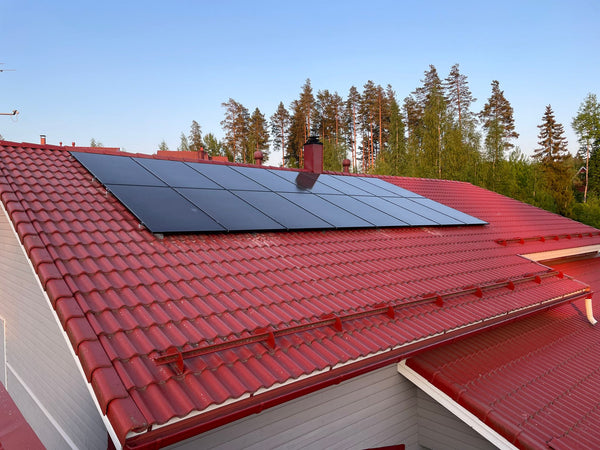
DualSun Flash 425W solar panels installed on the roof of a private house.
-
Mounting system: The mounting system is responsible for the safe installation and fastening of solar panels to the roof or ground of the property. It ensures that the solar panels are securely in place and optimally exposed to sunlight. For roof installations, we use Finnish Nordic Sun mounting systems with a 30-year warranty. For ground installations, we use Swedish screw pile-based systems.
-
Cabling: Solar panels are connected together using cabling. The cables carry the generated electricity to the inverter, which converts it into a usable form. When cabling, it is important to pay attention to the correct cable selection and careful cabling work to ensure electrical safety.
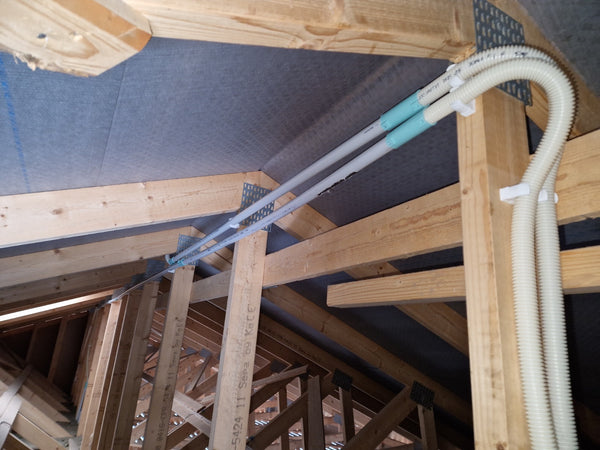
Cabling of the photovoltaic system in the mezzanine
-
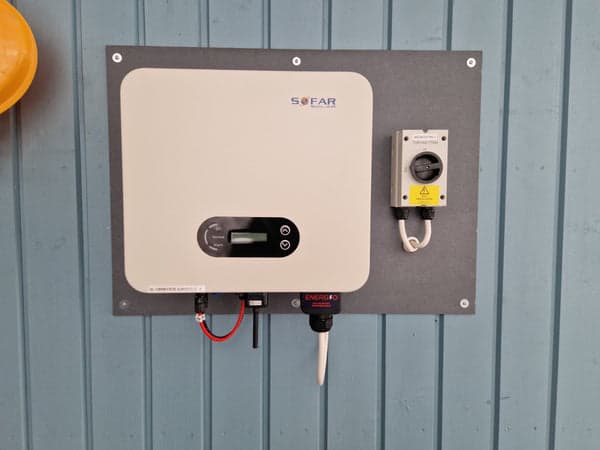
Inverter: Solar panels produce direct current (DC), but the household electrical grid uses alternating current (AC). The inverter’s job is to convert the direct current produced by the solar panels into alternating current, which can be fed into the electrical grid or used directly in the electrical appliances of the property. There are three main types of inverters: conventional string inverters, hybrid inverters, and microinverters. Hybrid inverters differ from conventional string inverters in that they allow the addition of a battery to the photovoltaic system.
-
Safety switches: Safety switches can be used to disconnect the system from the grid or shut it down, for example in emergency or fault situations. There are two safety switches: an AC safety switch to disconnect the inverter from the rest of the property’s electrical network and a DC safety switch to disconnect the voltage from the panels from the inverter. Many inverters have a built-in DC safety switch, so a separate safety switch is not needed unless the inverter is installed indoors, in which case a DC safety switch is needed outside, for example for rescue services.
-
Battery: Some solar power systems use batteries to store energy. The battery allows you to store excess electricity generated by the solar panels so that it can be used later, for example at night or on cloudy days.
-
Backup box: A backup box is an optional part of an acoustic solar system that is essential if you want the system to operate during power outages. The backup box isolates the system from the grid, allowing the solar system to continue operating and providing electricity to the property. It should be noted that some hybrid inverters include a built-in backup box, such as the Sofar Solar hybrid model, while others, such as the Huawei or Growatt hybrid models, do not include a backup box.

The solar power system’s battery is located in the building’s evenly heated basement.
2. Operation of the photovoltaic system
The operation of a photovoltaic system can be divided into the following stages:
-
Collecting sunlight: Solar panels absorb sunlight, which is made up of tiny particles called photons.
-
Converting photons into electricity: When exposed to sunlight, solar cells produce direct current when photons release electrons. This phenomenon is known as the photoelectric effect.
-
Converting DC to AC: The inverter receives DC from the solar panels and converts it into AC. The AC meets the requirements of the household electrical grid.
-
Use of electricity or feeding it into the grid: The alternating current produced can either be used directly in the property’s electrical equipment or fed into the grid. If the solar PV system produces more electricity than the property consumes, the excess electricity is fed into the grid unless the property has a battery. The electricity company usually pays the market price for the electricity produced.
-
Battery use (optional): If a battery is installed in the photovoltaic system, excess electricity is stored in the battery, from which it can be used when sufficient solar energy is not available.
3. Production monitoring
The most common inverters sold on the Finnish market include a remote monitoring application that allows you to monitor the amount of electricity produced, the operation of the solar panels and other system performance. This gives the owner valuable information about the efficiency of the solar power system and allows for necessary measures, such as detecting possible faults or cleaning the solar panels.
Summary
The operation of a photovoltaic system is based on the ability of solar cells to convert sunlight into electricity. Solar panels collect sunlight and produce direct current, which is converted into alternating current by an inverter. The mounting system and cabling ensure the safe installation and electrical connection of the solar panels. The battery allows for the storage of excess electricity, while the backup box ensures the operation of the system during power outages. Solar photovoltaic systems offer a sustainable and environmentally friendly way to generate electricity, while helping owners save on energy costs and reduce their carbon footprint.
Sustainable regions and smart villages together
We are pleased to announce that Energio Finland Oy has signed a letter of intent with eight Finnish companies to establish a joint venture so…
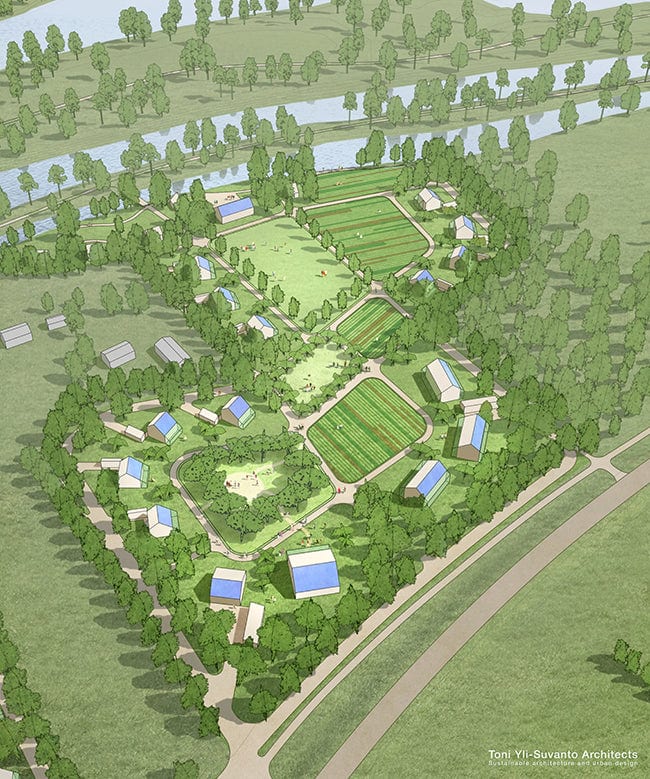
Energio Finland Oy and Arctic Smart Village enter into a framework agreement
Arctic Smart Village Oy, which develops sustainable housing, and Energio Finland Oy, which develops and utilizes innovative energy systems, have signed a framework agreement for…
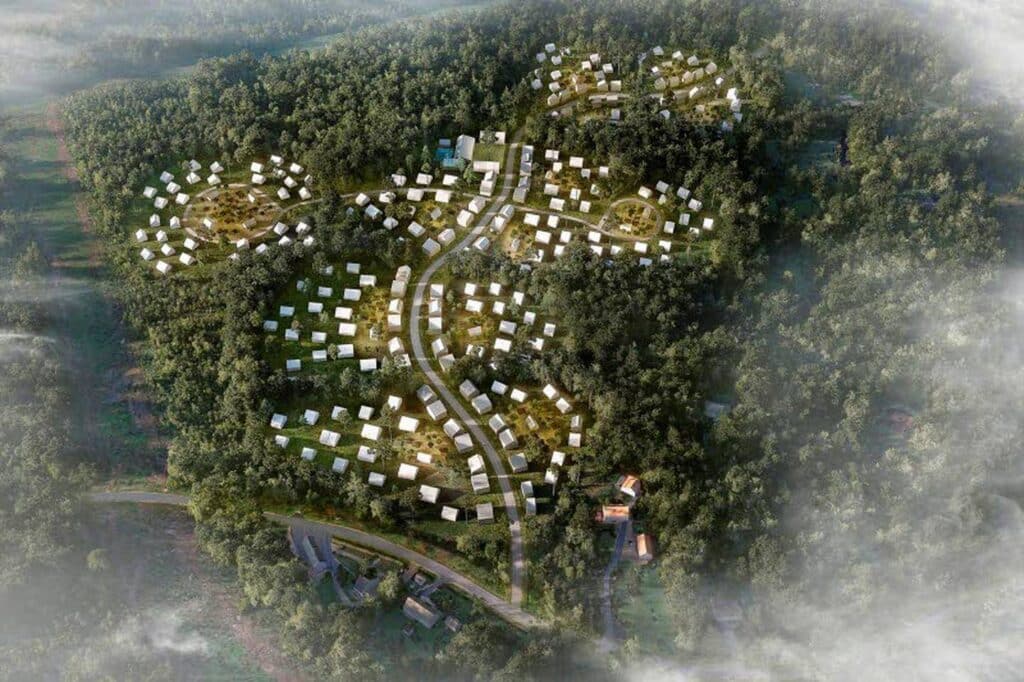
Energio is involved in delivering the energy system to the Masala Eco-Smart Village
Emission-free living and mobility are possible with the production of local energy. Innodriver Oy, the project company for the Masala eco-friendly village, has signed a…

Energy solutions are integrated into the architecture of wooden construction in Mynämäki
The residential area project being planned in Mynämäki is researching and developing ecological and healthy construction. The aim is to improve the energy efficiency of…
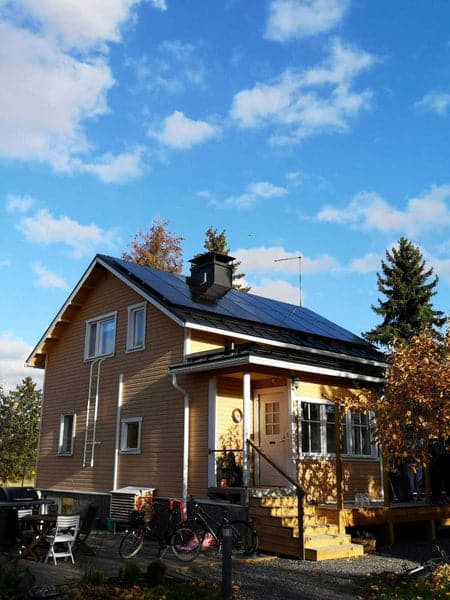
Guide to sizing a solar power system
The skyrocketing price of energy has led consumers to want significantly larger solar power systems than before. Today, you could say that there are two…