
I sit outside on the wall eating lunch, the autumn sunshine warming my face. I look up at the roof, as I have so many times in the past 15 months, and think about how grateful I am that I got a solar power system.
Many people might say that of course I bought a solar power system, because I sell them myself. Despite this fact, I will now share my experiences and explain why I am grateful that I bought the system.
What kind of destination
The target is a two-story detached house located in Southern Finland, which is heated by direct electric heating, mainly through underfloor heating. In addition, the building has an air-source heat pump on the upper floor. There are no electric car charging points.
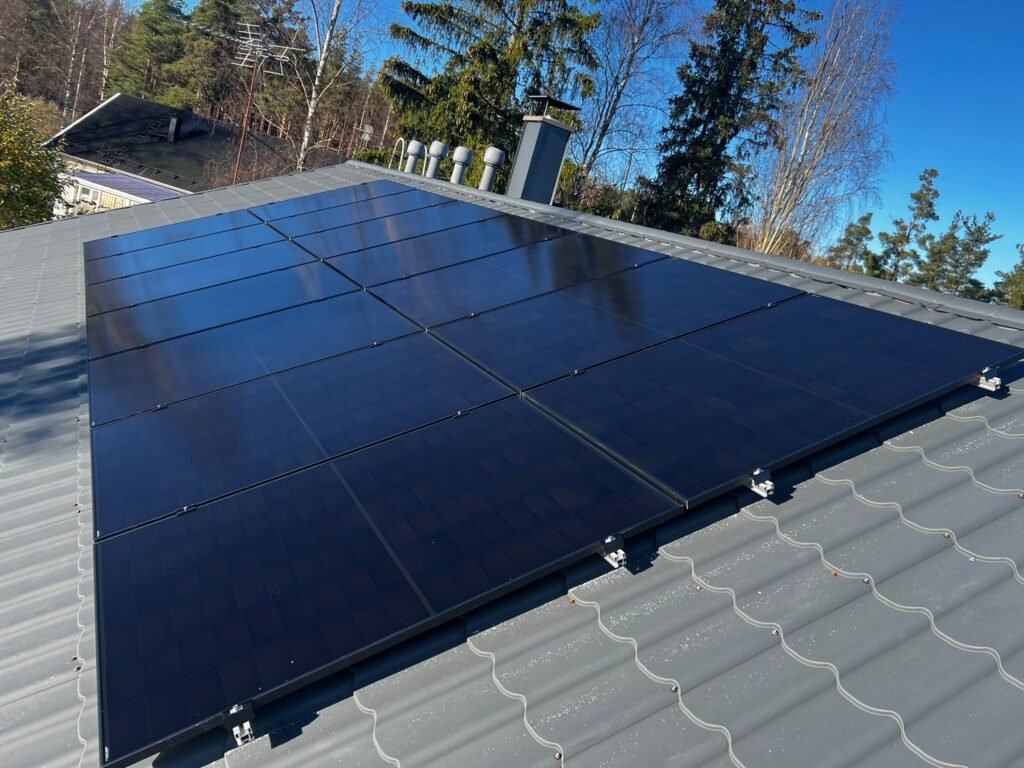
The building is L-shaped, with the inside bevels of the L facing directly south and west. A 6.2 kWp solar power system has been installed on these bevels, with about half of the panels facing south and half facing west. The roof angle is about 20 degrees.
Installing the panels in two different directions means that the maximum peak power of the system will be lower than if the panels were all facing south, but on the other hand the power will remain higher for a larger part of the day. At its highest, the system can reach about 4.7 kW of power, but the power is more consistent from morning to afternoon.
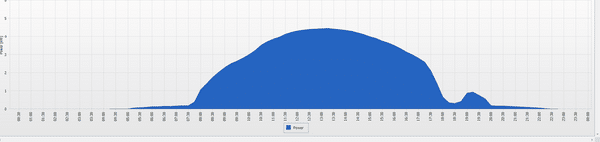
The figure above shows the system’s output for one day at the end of May, which clearly shows that the peak power is not high, but the curve is flat. The drop in the afternoon is due to shading from a tree on the neighbor’s property.
The yield of solar panels has surprised
There have been two big surprises for me. The first has been how early in the winter the system starts producing significantly. The second has been the yield on cloudy and foggy days.
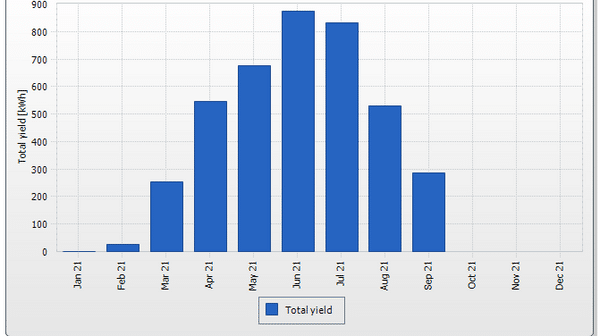
The figure above shows that, despite the snowy winter, the system has already started producing in March and that April’s yields are almost at the same level as May.
The results of the winter months have therefore been a positive surprise. In practice, the snow has not remained on the panels, but has slid off very quickly. Furthermore, in those places where snow has remained on the panels, it has melted away quickly.
As I write this article, the weather has changed from sunny lunchtime to cloudy late September. Still, the system is producing about 1 kW of power at the time of writing, which would be enough for a combination of air source heat pump and underfloor heating at a low output. So it can be said that a large part of the building’s heating is done with the electricity generated by the panels from March to October.
The reduction in energy bills has affected the payback period
The purchase of the panels has had a major impact on the building’s energy bill and, on the other hand, on the living comfort. Electricity bills have been around 15 euros in the summer. What is noteworthy here is that the air heat pump has been running practically all summer long. Previously, the building was stiflingly hot in the summer. Today, it is wonderfully cool and the best thing is that the entire cooling system runs completely green.
We have provided you with the simplest possible production control for the hot water heater, meaning we installed a timer in the hot water heater’s socket, which turns on the power to the heater between 9:30 and 17:00. In this way, we ensured that the maximum share of hot water was produced by the panels. We have never had to compromise on shower comfort.
Based on the system’s first 15 months of returns, it can be said that the payback period for the system will be approximately 9 years. This does not take into account the increase in energy prices, which will likely improve the system’s profitability further. The panel manufacturer used in this system gives a 30-year power output guarantee for its panels, and in my opinion, the panels will continue to be reasonably productive for another twenty years after this. So, it can be said that the system will pay for itself many times over.
Significant reduction in carbon footprint
According to Sitra, the average carbon dioxide emissions of Finns are 10.3 tons per year. Just over a third of a Finn’s emissions come from housing. Other significant sources of emissions are transportation, food and purchases. A good question is how much does purchasing a solar power system reduce the carbon footprint of a family of 3?
If we use Sitra’s figures, our family of 3 would have generated 38.6 tons of carbon dioxide emissions in 15 months without the panels. According to our solar system’s monitoring system, the system has avoided 4.5 tons of carbon dioxide emissions during the time it has been in use. In other words, purchasing a solar system has reduced our family’s emissions by roughly 12%. I think that’s a lot.
Was it worth buying solar panels?
I think the question of whether the purchase of the system was worth it is very easy to answer. It really was. When sized correctly, a solar power system pays for itself many times over. Green values are important to me, so it is really meaningful to monitor the system’s performance and know that the cooling, a large part of the heating and most of the hot water are produced without carbon dioxide emissions.
I hope my experience encourages you to make a green decision and get solar panels for your property, whether it’s small or large.
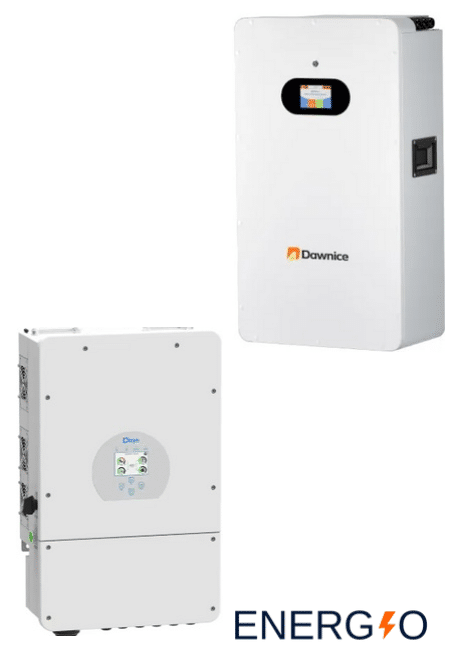
Save, stock up and be prepared: four reasons to get a home battery right now
Use your solar power efficiently all year round The biggest challenge with a solar power system is often that electricity is produced when consumption is…
Solar panels and climate benefits: How much does a homeowner’s system actually save on emissions?
Purchasing solar panels is often seen as a climate action. But how significant an impact does an individual system actually have on the carbon footprint?…

Emaldo® – Grid Rewards announcement 19.5.2025
Below is the Emaldo® press release published on May 19, 2025 about the Emaldo® – Grid Rewards program. Activating Grid Rewards in Finland is a…
Emaldo® acquires CheckWatt – The end result is the largest reserve market aggregator in the Nordics
Every now and then you come across news that makes you rub your eyes a few times. Today, April 2, 2025, we are able to…
Aiko Neostar – The best solar panel? Interview with Jere Kaasinen – Aiko
Choosing solar panels can be quite a task for the uninitiated. Each manufacturer promises better features than the other, which the salespeople then extol, even…

Energio is piloting an energy solution in the Port of Kalajoki
Implementing new energy solutions is always extremely interesting. We are pleased to announce that Energio and the Port of Kalajoki have signed an agreement to…