
A housing company, or any electricity producer with multiple usage locations on the same electricity connection, such as a hall share, shopping center, campus area, or agricultural property, can expand the usage possibilities of its own electricity production by establishing an energy community.
Previously, a property’s own power plant, such as solar panels, could only be used for the property’s electricity consumption. With the help of an energy community, the power plant’s output can now also be used for the needs of apartments and commercial premises. In practice, this is done through virtual metering. I will tell you more about virtual metering later in this article.
Energy community services are provided by network companies. The energy community service is free of charge for its members.

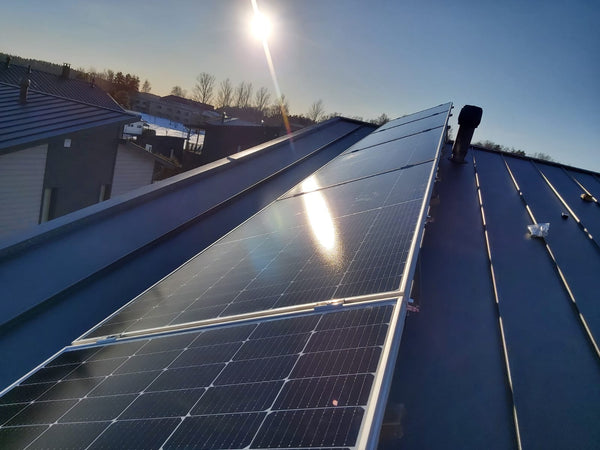
Solar panels installed on the roof of a housing association.
Energy community multiplies the building’s renewable energy yield potential
Without an energy community, a solar power system is usually sized for a property in relation to the property’s electricity consumption. In this case, the greatest benefit is achieved when the power plant is sized so that the electricity produced can be utilized as much as possible for own use.
Thanks to the energy community, the possibilities for using solar electricity expand, and the optimal number of solar panels increases. This reduces the need to buy electricity from outside, lowers the investment costs of solar panels compared to property-specific solutions, and shortens the payback period of the equipment. In addition, housing companies use environmentally friendly energy, which can increase the value of apartments thanks to sustainable energy solutions.
An energy community can only consist of usage points with the same electricity connection, and the total nominal power of production must not exceed 1 megavolt ampere (MVA).
Example
The property’s electricity consumption is 15,000 kWh per year, so without an energy community, the optimal number of solar panels would be 14-16 panels.
The total electricity consumption of the site (for example, residents in a housing company, tenants in a hall share, etc. combined with property electricity) is 150,000 kWh, so the optimal number of solar panels for the energy community is approximately 80-150 panels, depending on the site’s electricity consumption profile.
At the same time, the property was able to prepare for the increase in property electricity consumption caused by the future installation of electric car charging points.
In other words, the energy community even increased the potential for solar power tenfold.
Credit Calculation in Energy Communities: Efficient Energy Distribution
Credit accounting is an essential part of energy communities, enabling the calculation and sharing of power plant production among members. This virtual metering process does not require new electricity meters for energy community members, making it a practical and economically sound solution.
The compensation calculation can be performed in two different ways, but in both cases the property’s surplus production is divided among the apartments based on the distribution ratios agreed upon in the energy community, usually in the same ratio as the shareholders pay the company fees. If the distribution ratios deviate from the usual ones, they must be recorded in the articles of association.
Option 1 (SMA): The housing company sells unused production
This option allows that if the apartment is unable to use the production allocated to it, the unused production becomes the property of the housing company and can be resold to the chosen electricity company. This can happen, for example, on a sunny summer day when the apartment’s electricity consumption is low.
Option 2 (SMB): Apartments sell unused production according to the decided distribution ratios
In this option, apartments can sell unused production to an electricity vendor of their choice according to the decided sharing ratios. This requires that each member of the energy community enters into a separate agreement with the electricity vendor of their choice for the sale of surplus electricity.
If the electricity is cut off to an apartment belonging to an energy community, the relevant share will be transferred to the housing company for sale.
In both distribution methods, the production of production equipment up to 100 kW and the consumption of the point of use are netted per hour first at the point of use where the production equipment is located. Surplus production is then distributed among the members of the energy community according to the agreed distribution ratios. The shared production of the members of the energy community and the consumption of the point of use are also netted per hour. If there is excess production after this, it is sold according to the selected model.
Such a credit calculation enables a fair and efficient way to distribute the energy produced among members of the energy community and promotes the use of renewable energy sources in a sustainable manner.
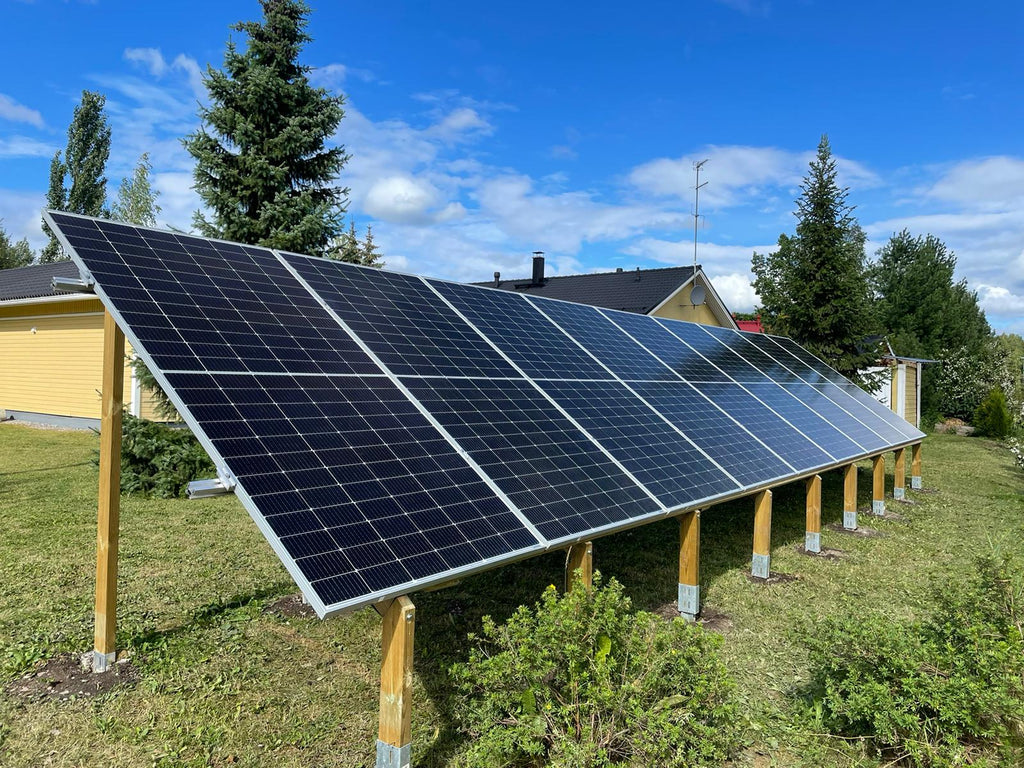
Customer Interview – A Year with Solar Panels – Was it Worth It?
I’m eating lunch at home when my friend Patrick calls and excitedly explains how well the solar power system he installed last summer produced despite…
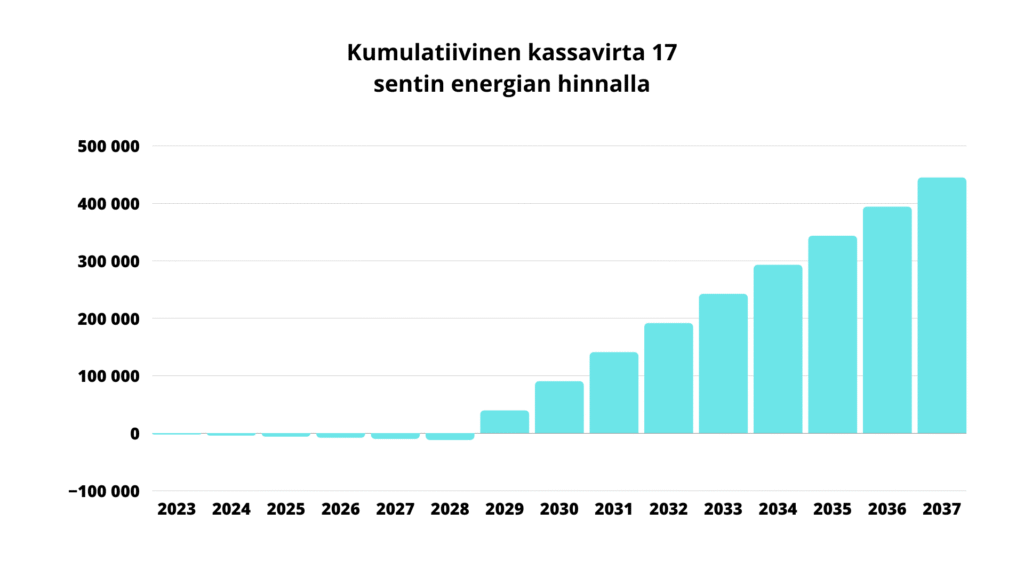
Cash flow positive even from day one – Leasing financing is beneficial for solar panels
The price of energy has led many companies and housing associations to consider purchasing a solar power system. However, there is often one practical obstacle…
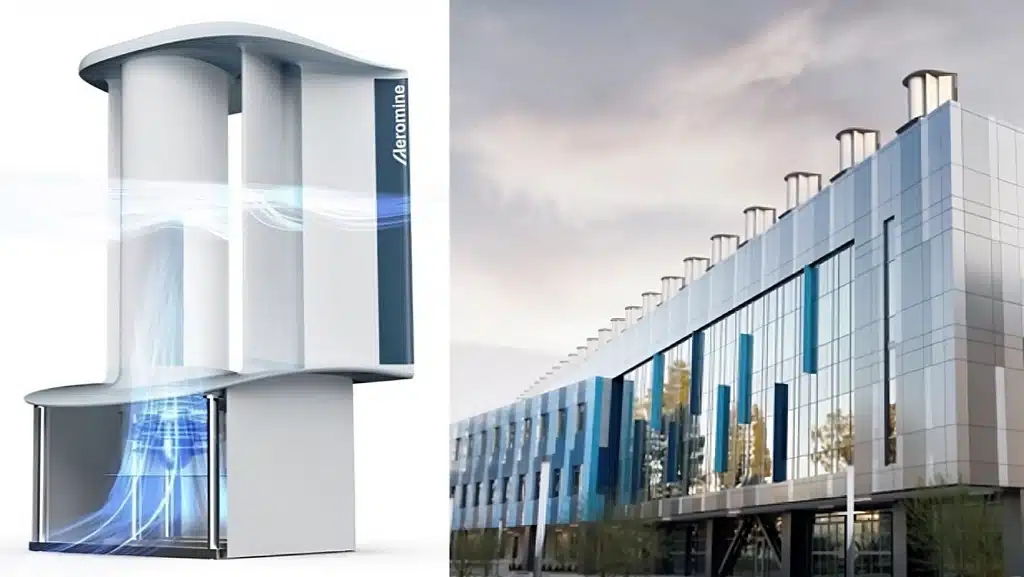
Pilot sites for a revolutionary platform-less wind turbine!
There have been many challenges in Finland in utilizing wind power in buildings. Now, a solution is coming for larger properties. Namely, Aeromine Technologies has…
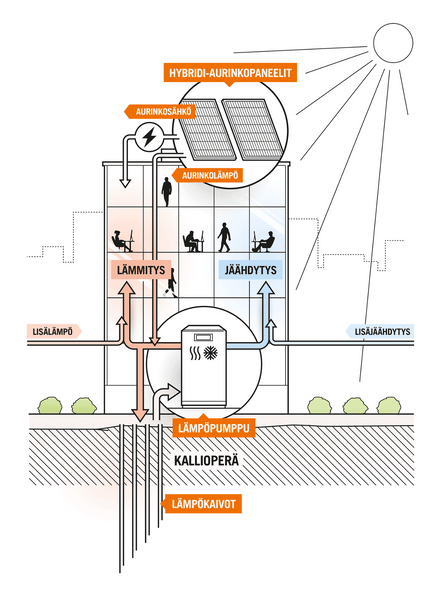
Energio and Consti sign framework agreement for the delivery of energy systems
We are pleased to announce that Energio has signed a framework agreement to supply energy systems, such as solar panels, hybrid panels, photovoltaic facades, photovoltaic…
The 2022 installation season has opened!
We are happy to announce that the 2022 solar panel installation season has opened! Spring has progressed so far that some roofs are already starting…
New Year – New Solar Panel Packages
The year 2022 has started on an interesting note in the solar panel market. The freight prices of panels have multiplied compared to a year…