
Electricity and heat from the same panel
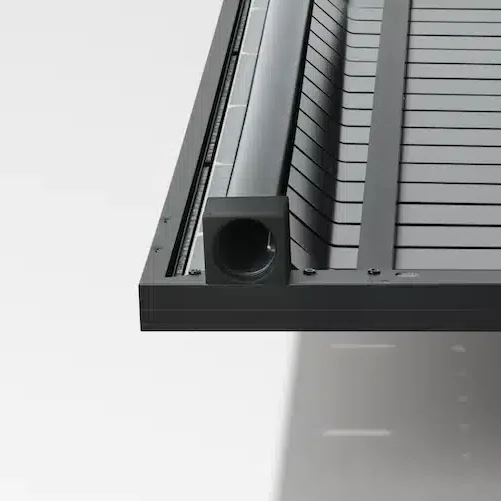
Hybrid panels, or PVT (Photovoltaic Thermal) panels, combine solar electricity and heat in a unique way. In the production of solar electricity, the solar cells heat up. A heat exchanger attached to the back of the cells collects this heat, cooling the panel at the same time. The uninsulated heat exchanger also absorbs energy from the outside air. For these reasons, hybrid panels produce low-temperature thermal energy very efficiently, comparable to the thermal energy obtained from geothermal wells.
One hybrid panel replaces 20-24 meters of geothermal well. Its main applications are in conjunction with geothermal systems to improve efficiency in locations where it is not possible to drill enough geothermal wells on the site or where existing wells are cooling down.
Made in France
The hybrid panels we offer are from the world's leading hybrid panel manufacturer, DualSun. They are manufactured in Lyon, France.
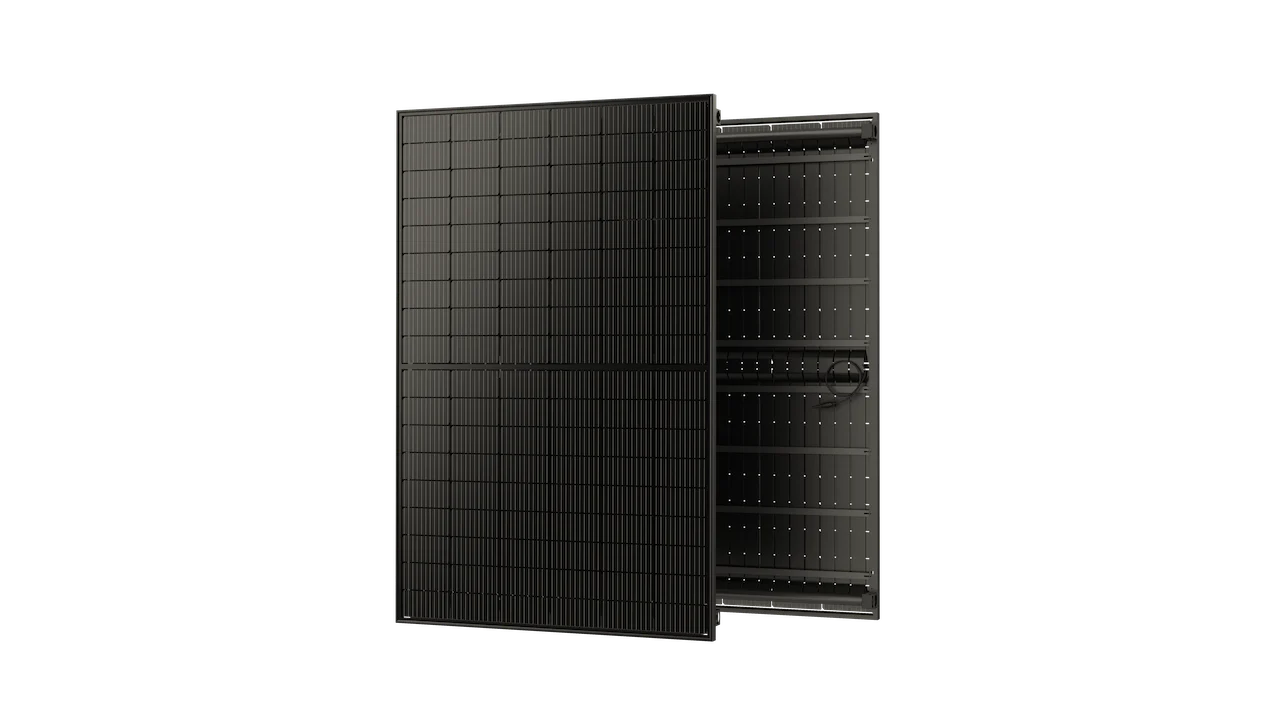
DualSun Spring hybrid panels combine glass-glass photovoltaic panels with N-type TOPCon cells and an efficient heat exchanger in the same panel.
The panels have an electrical output of 425W and a thermal output so high that one hybrid panel produces 7-8x the energy compared to a conventional solar panel.
Heat demand is saturated quickly
Since one hybrid panel produces over 2000 kWh of thermal energy per year, the required amount of thermal energy is usually achieved faster than the electricity demand. Often, for example, 1/3 of a solar power system is hybrid panels and the rest is conventional solar panels.
An excellent partner for heat pumps
Heating and hot water account for 80% of energy consumption in buildings
The massive power of hybrid panels is best harnessed when they are combined with heat pumps. Heating and hot water represent up to 80% of a building's energy consumption, so increasing the efficiency of the heat pump will result in significant savings not only in the pump's energy consumption but also in the energy bill. In addition, the pump's lifespan is significantly improved because its compressors do not have to work at such high power.
Significantly improves the COP of the heat pump
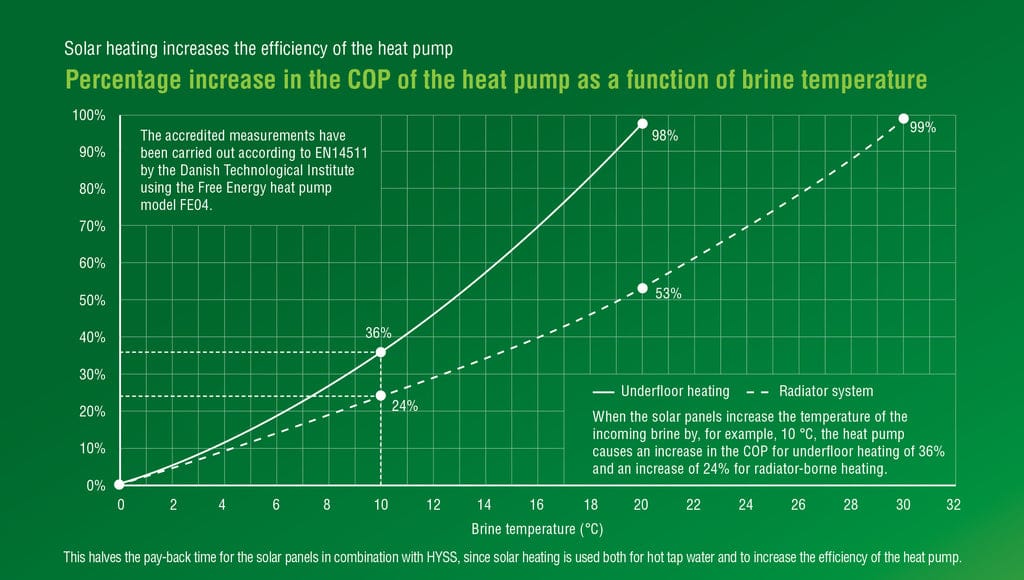
The diagram below shows the huge impact of the preheating of the fluid by the hybrid panels on the COP of the heat pump. According to a study by the Danish Technological Institute, a 10 degree increase in fluid temperature results in a 36% increase in the COP of the heat pump, and a 20 degree increase can reach figures of up to 98%.
When are hybrid panels an excellent choice?
With the new geothermal system
If you are purchasing a new geothermal heating system for your property, hybrid panels are an excellent choice. They significantly increase the efficiency of the geothermal heat pump, prevent well cooling problems, and enable a greater amount of energy to be extracted per well meter.
Wells are replaced with energy produced by hybrid panels, allowing significantly fewer wells to be drilled, saving significant costs.
If the plot is not large enough for a geothermal heating system
Plots in urban areas are small. This means that geothermal systems are undersized in terms of well field, power coverage, energy coverage, or all of the above.
With hybrid panels, 35% fewer wells are needed on average, allowing an optimally sized geothermal system to fit on a plot of land where it would not normally fit.
If the current geothermal system is not working optimally
There are many problems with the operation of geothermal systems that prevent the system from working properly. For example, cooling or freezing of wells can be prevented and already cooled wells can be revived using hybrid panels.
You are replacing a heat pump in an old system.
In old geothermal systems, the sizing principles are often different or the energy consumption profile of the site has changed. When the old pump reaches the end of its life, it may be that the number of wells drilled is not enough for the new pump. Adding hybrid panels is often significantly cheaper than customizing the well field for the new pump.
The need for heat increases
Sometimes the heat demand increases beyond the size of the existing system. In this case, it is often necessary to replace the heat pump, drill more wells, or both. In these situations, adding hybrid panels will be significantly cheaper in most cases.
As a heat exchanger with heat pumps
Hybrid panels can also be used to create a hybrid system with district heating and heat pumps. In this case, the hybrid panels act as a heat exchanger for the heat pumps, providing the base load for the pumps, and the district heating provides the necessary power peaks.
When hybrid panels are not the right choice
Hybrid panels are not suitable for all applications. Below are listed common cases where hybrid panels are not optimally suited in Nordic conditions. Some of these cases are such that they work well in areas with less seasonal variation, such as in Southern Europe. For this reason, many of these cases can be found as recommended uses on the manufacturers' websites. We want the systems to work optimally. For this reason, we do not offer hybrid panels for the following purposes in principle.
For producing hot water
Although hybrid panels produce heat, their temperature profile is different from that of conventional solar collectors. The temperature profile is compatible with ground source heat pumps, but direct power to hot water is often not economically viable.
For small geothermal projects
Hybrid panels are not in many cases an economically viable solution for small geothermal systems with a single geothermal well. In such cases, the impact of hybrid panels on the costs of the well field and heat pump is not sufficiently significant to make the additional cost of hybrid panels unreasonable.
Properties without a heat pump
With the exception of low-temperature swimming pools, projects without any kind of heat pump are generally not profitable in the North with hybrid panels. On the other hand, for example, with a heat pump, the outdoor swimming pool project our partner is implementing in Northern Sweden has a system SCOP of over 12!
No fluid circulation in the sites
In locations where there is, for example, direct electric heating without any liquid circulation, it is generally not sensible to invest in hybrid panels unless the heating system is extensively renovated.
Sites where there is no place to place heat
Naturally, if the site does not have any place to place heat, such as geothermal wells or the base load of a heat pump, hybrid panels are not profitable.